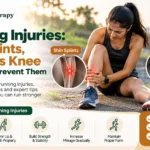
Many people assume knee pain is something that only arrives with age. In reality, more and more young adults in their late teens, twenties and thirties are dealing with aching, clicking or sore knees. Long hours at a desk, intense gym routines, weekend sports, running and a sudden jump in activity can all take a toll on the knee joint.
Most of the time, knee pain in a young person is mechanical and responds well to the right care. But some symptoms should never be ignored. In this guide, we explain the most common causes, the warning signs to watch for, and how to decide when it is time to get help.
How the Knee Works (and Why It Gets Irritated)?
The knee is one of the most heavily loaded joints in your body. It connects the thigh bone to the shin bone and relies on ligaments, cartilage, tendons and surrounding muscles for stability. With every step, squat, stair climb or jump, these structures share the load.
Problems usually begin when that load becomes uneven or exceeds what the knee can handle. This might be due to weak hips or thigh muscles, tight calves, poor movement habits, a sudden increase in training, or an injury that was never fully rehabilitated.
Common Causes of Knee Pain in Young Adults
1. Patellofemoral Pain (Runner’s Knee)
This is one of the most frequent causes of knee pain in young adults. It feels like a dull ache around or behind the kneecap, often worse when climbing stairs, squatting, running or sitting for long periods with bent knees. It is usually linked to the kneecap not tracking smoothly, often because of weak hip muscles or tight thigh muscles.
2. Patellar Tendinopathy (Jumper’s Knee)
Pain just below the kneecap that worsens with jumping, sprinting or squatting is often an overloaded patellar tendon. It is common in people who play basketball, volleyball, football or who train legs heavily at the gym.
3. Iliotibial Band (ITB) Syndrome
A sharp or burning pain on the outer side of the knee, especially during running or cycling, can point to ITB irritation. It tends to build up gradually with repetitive activity.
4. Ligament Sprains and Tears
Twisting the knee, landing awkwardly or taking a direct hit can strain or tear ligaments such as the ACL or MCL. You may feel a pop, swelling and a sense that the knee is giving way. If this describes your injury, read about our approach to ACL rehabilitation.
5. Meniscus Injury
The meniscus is the cartilage cushion inside the knee. Twisting under load can cause pain, swelling, catching or locking sensations, and difficulty fully straightening the knee.
6. Overuse from Running and Gym Training
Increasing mileage too quickly, poor footwear, weak stabilising muscles or faulty technique can overload the knee. Many such cases are classic running injuries or gym injuries, especially in people who ramp up training without enough recovery.
7. Poor Movement Mechanics and Muscle Imbalance
Sometimes the knee is simply the victim. Weak glutes, stiff ankles, flat feet or poor squatting and landing patterns can send extra stress through the joint. A biomechanical assessment can help uncover these hidden contributors.
8. Prolonged Sitting and Sedentary Habits
Desk workers often develop stiffness and weakness around the knee and hip from sitting for hours. When they suddenly start exercising, the knee struggles to cope.
9. Early Arthritis or Inflammatory Conditions
Although less common, some young adults develop joint problems linked to previous injury, inflammatory conditions or autoimmune causes. Morning stiffness lasting more than 30 minutes, swelling in more than one joint, and pain that does not settle with rest need a proper medical evaluation.
Warning Signs: When to Worry
Most knee pain improves with simple measures, but certain symptoms need prompt medical attention. See a doctor urgently if you experience any of the following:
- Inability to put weight on the leg after an injury
- Visible deformity or a knee that looks out of place
- Sudden, significant swelling within hours of an injury
- Locking: the knee gets stuck and you cannot fully bend or straighten it
- Repeated giving way or a feeling that the knee will collapse
- Fever, redness and warmth around the joint, which may indicate infection
- Severe night pain or pain at rest that keeps waking you
- Calf swelling, tenderness or warmth, which may signal a blood clot
- Numbness or tingling in the leg or foot
- Unexplained weight loss along with persistent joint pain
When to See a Physiotherapist?
You do not have to wait until the pain becomes severe. Consider booking an assessment if:
- Pain lasts more than a week or two despite rest
- Your knee hurts when climbing stairs, squatting or getting up from a chair
- You notice clicking, stiffness or mild swelling that keeps coming back
- Pain is limiting your workouts, sport or daily routine
- You have had a past injury that never felt fully right
- You want to return to sport safely after an injury
A physiotherapist can identify the cause, rule out concerns and refer you for imaging or specialist care if needed. Our knee pain page explains how we assess and treat different knee conditions, and our orthopaedic physiotherapy team handles joint and musculoskeletal problems of this kind.
How Physiotherapy Helps Knee Pain
Treatment is built around the cause, not just the symptom. Depending on your diagnosis, it may include:
- Pain and swelling management in the early stage
- Manual therapy to ease stiffness and restore joint movement
- Targeted strengthening of the thighs, hips and calves
- Movement correction for squatting, running, landing and stair climbing
- Gradual return-to-activity planning so you do not flare the knee up again
- Long-term conditioning through strength and conditioning to build resilience and reduce repeat injuries
If your pain is linked to sport or training, our sports physiotherapy approach also focuses on performance, load management and safe progression.
Simple Self-Care Tips for Mild Knee Pain
For mild pain without any red-flag symptoms, these steps may help while you arrange an assessment:
- Modify, don’t stop completely: Reduce aggravating activities such as deep squats, jumping or long runs, but keep gently moving.
- Use ice or heat: Ice may help after activity or a flare-up, while warmth can ease stiffness.
- Strengthen gently: Straight-leg raises, glute bridges and supported mini squats within a comfortable range can help.
- Check your footwear: Worn-out or unsuitable shoes can change how your knee is loaded.
- Build up gradually: Increase training by small amounts rather than sudden jumps.
- Break up sitting: Stand and move every 30 to 45 minutes.
If pain worsens or does not improve within a couple of weeks, get it checked.
Conclusion
Knee pain in young adults is common, and in most cases it improves with the right combination of rehabilitation, load management and movement correction. The key is knowing what is routine overuse and what is a warning sign. Do not ignore locking, giving way, major swelling, fever or pain that persists despite rest.
If you are in Dadar and dealing with knee pain, the team at Dadar Physiotherapy can assess the cause, guide your recovery and help you get back to the activities you enjoy. Book a consultation with Dadar Physiotherapy today and take the first step towards moving without knee pain.